
Swordsman422
-
Posts
581 -
Joined
-
Last visited
Content Type
Profiles
Forums
Events
Everything posted by Swordsman422
-

F14 Skinners thread (Paintkit in 1st post)
Swordsman422 replied to David A Sell's topic in DCS: F-14A & B
Thank you. Real life got in the way for a while. Skins are done, but I haven't had time to get good screen shots and package them all up. Should be this week I hope. -
Which afforded the F-14 another decade of service. Diversify or die. And OEF and OIF would not have gone as well for the Navy if the F-14 hadn't been available as the premier carrier-borne strike fighter. They made the right choice.
-
Visually, the -68 used by Tomcat crews looks almost exactly the same as the -55. That VF-201 image is unusual in that the -68s still have their 600 kt visors installed, but I don't supposed 201 was using ANVIS, which was incompatible with the 600 kt visor. It isn't unknown to see an F-14 crewman wearing a 600 kt visor, but it is pretty rare. On occasion in the F/A-18 you saw pilots wearing the bugeye visors from HGU-84s, but same general story there. A low profile helmet with a bungee visor should cover the majority of scenarios from ~1988 to 2006. HGU-33's with bungee visors, eared edgerolls, and light weight bayo receivers, HGU-55s, and HGU-68s with bungee visors are fairly indistinguishable at distance. But that 600 kt visor just looks cool, so I wouldn't balk at seeing it as well.
-
Those are both unmodified -68s. The TacAir helmet elephant ears were cut short beneath the 600kt track and the visor cover snaps were higher and further forward. The HGU-68 cover snaps are in the same place as the visor snaps on the -55, which is why the modification to a bungee visor was so easy. TacAir helmet.
-
Pretty much all US Navy tacair assets were using some variety of low-profile helmets after ODS, first the HGU-55, and then the HGU-68, so Tomcat crews of all models were using it. The differences between the HGU-55 and HGU-68 is primarily in the material of the helmet shell. The -55 is graphite/aramid and the -68 is nylon graphion and laminated graphite. Stock, the HGU-68 is issued with a 600kt low-profile track visor, but in fleet F-14 squadrons, the PRs removed these as they were incompatible with night vision systems like the ANVIS and replaced them with the same bungee visor you see on the -55. It's US Navy regulation to cover the helmet shell with 3M reflective tape, which hides the darker material of the -68 shell, making it indistinguishable at DCS view distance from the -55. Perhaps one of the only ways to tell is the screw holes for the 600kt visor track are often visible in the leather elephant ears and on the left side of the helmet forehead, though these latter screw holes are sometimes covered with tape dots. If you see a fighter crew with what looks like an offset streak of dark grey or black on the helmet, it's likely a -68. This VF-143 crew are wearing -68s, and you can see the details I mentioned. Small things like that can be handled with texture work.
-
F14 Skinners thread (Paintkit in 1st post)
Swordsman422 replied to David A Sell's topic in DCS: F-14A & B
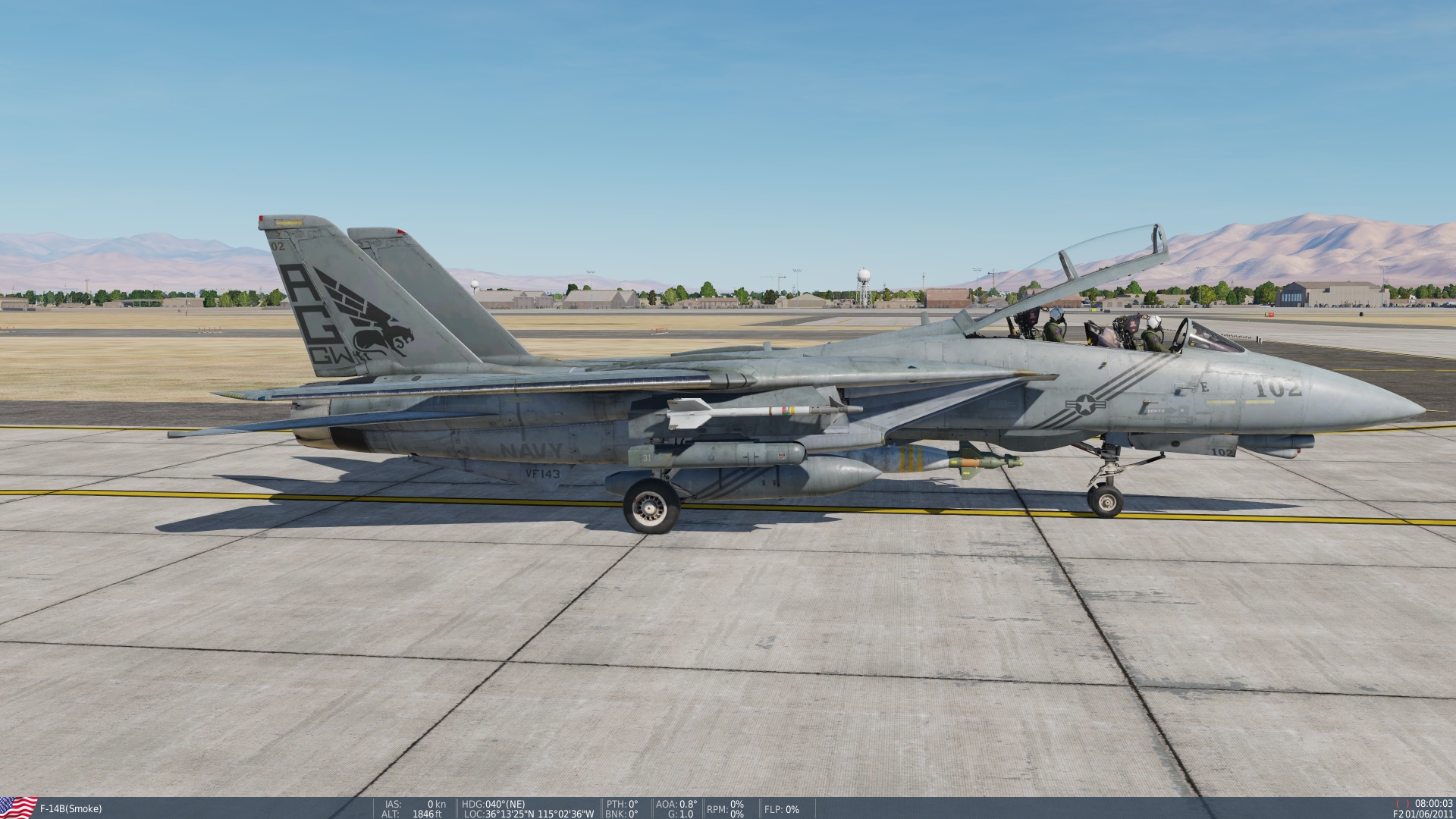
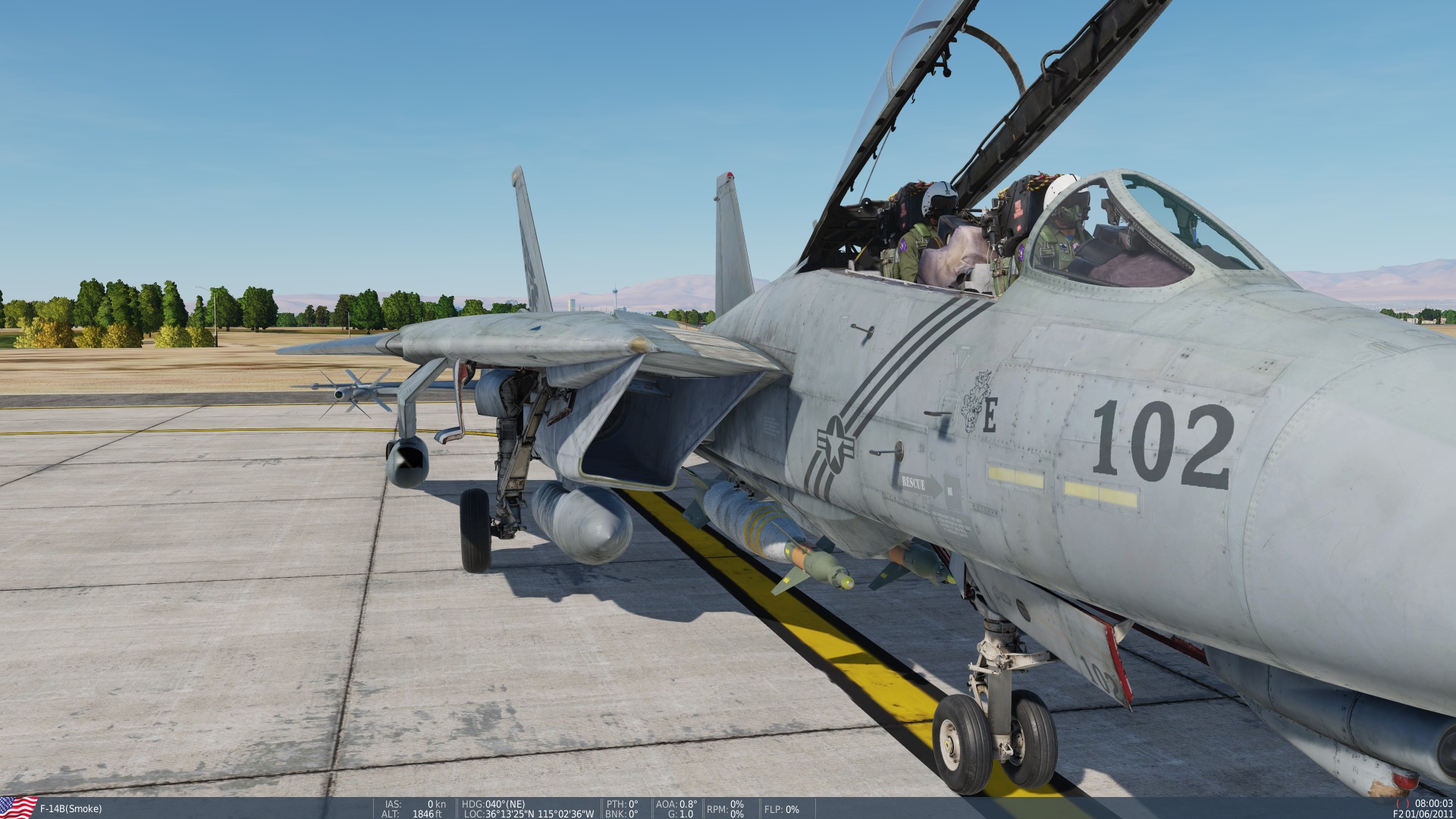
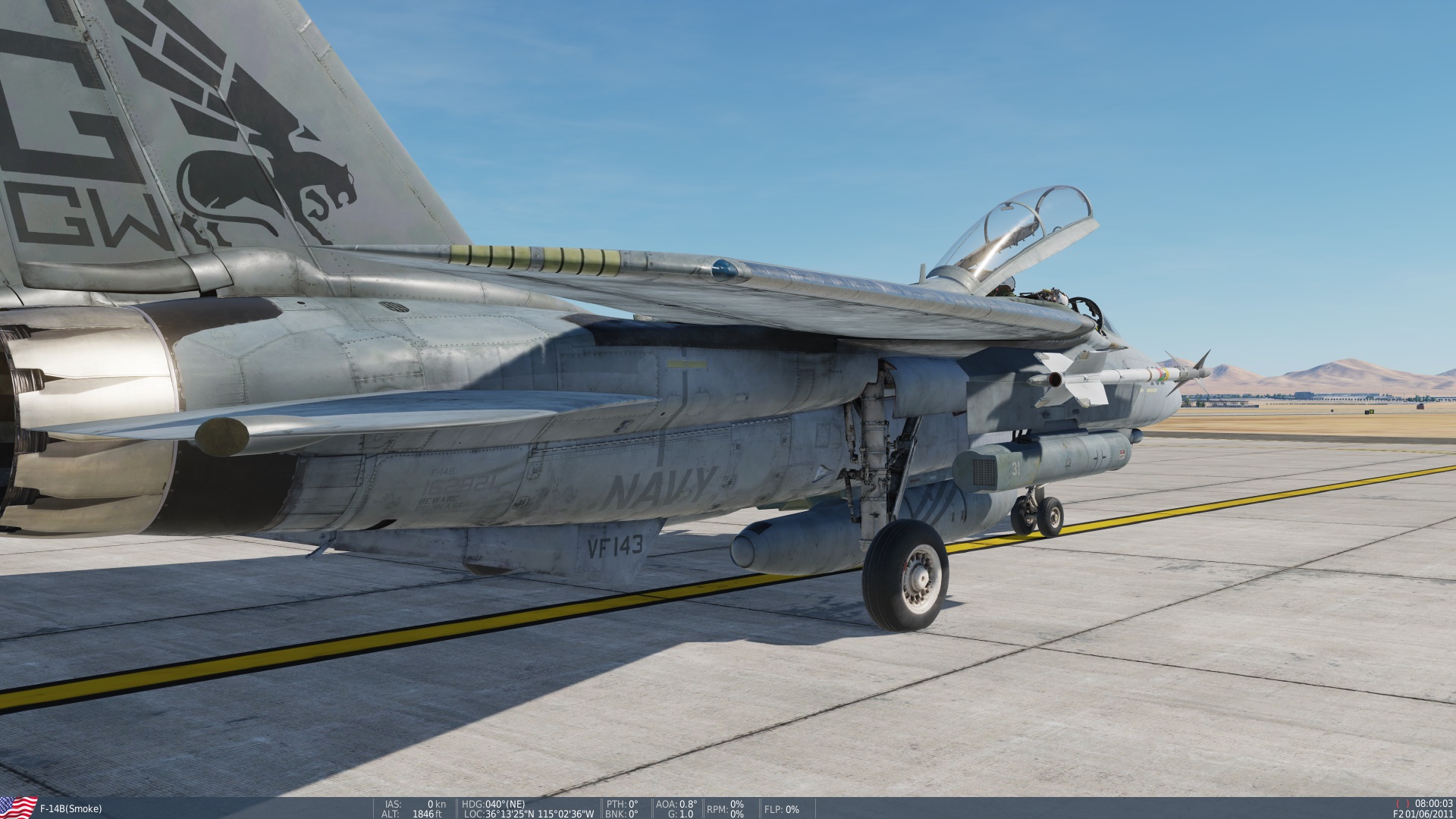
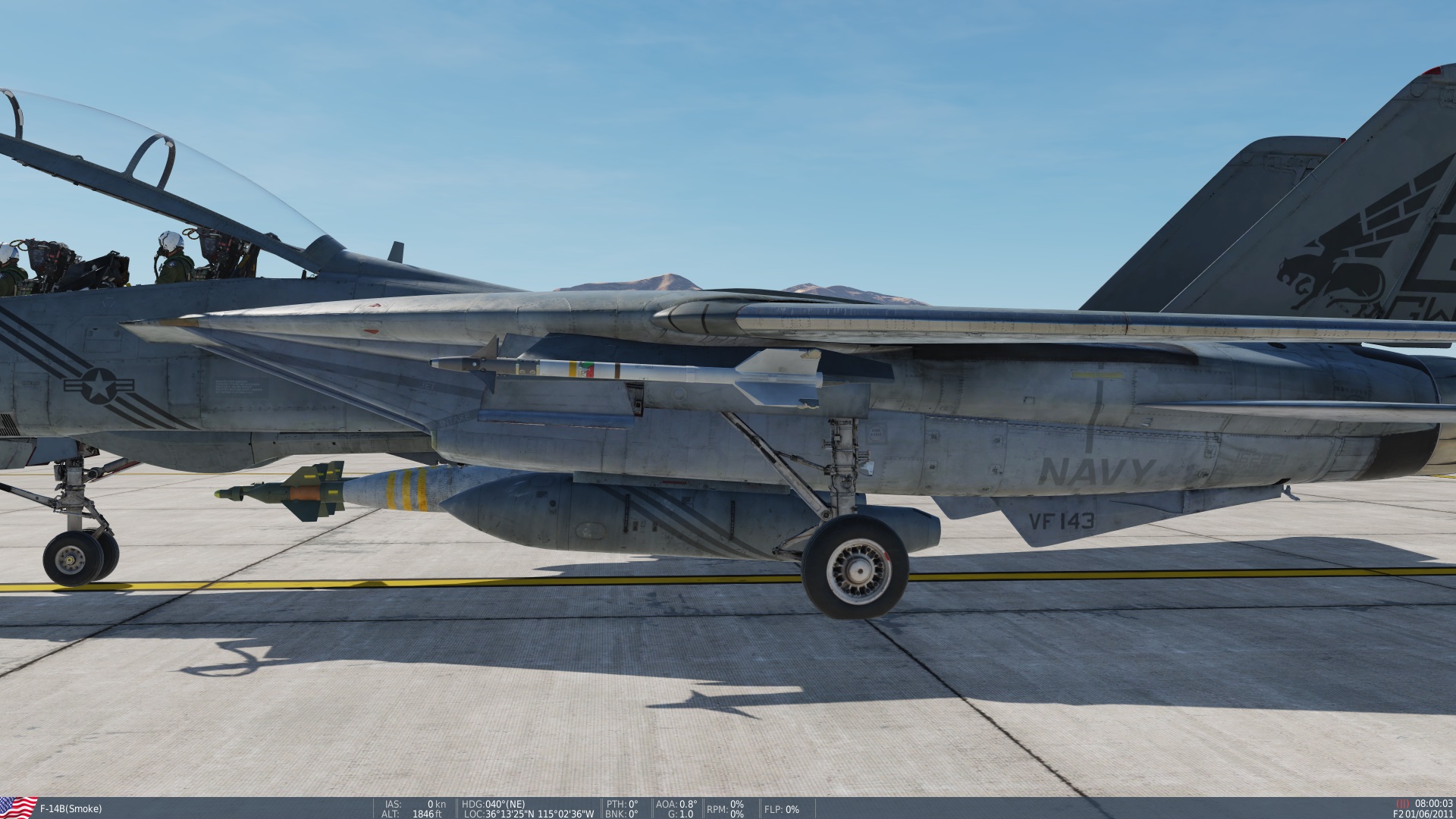
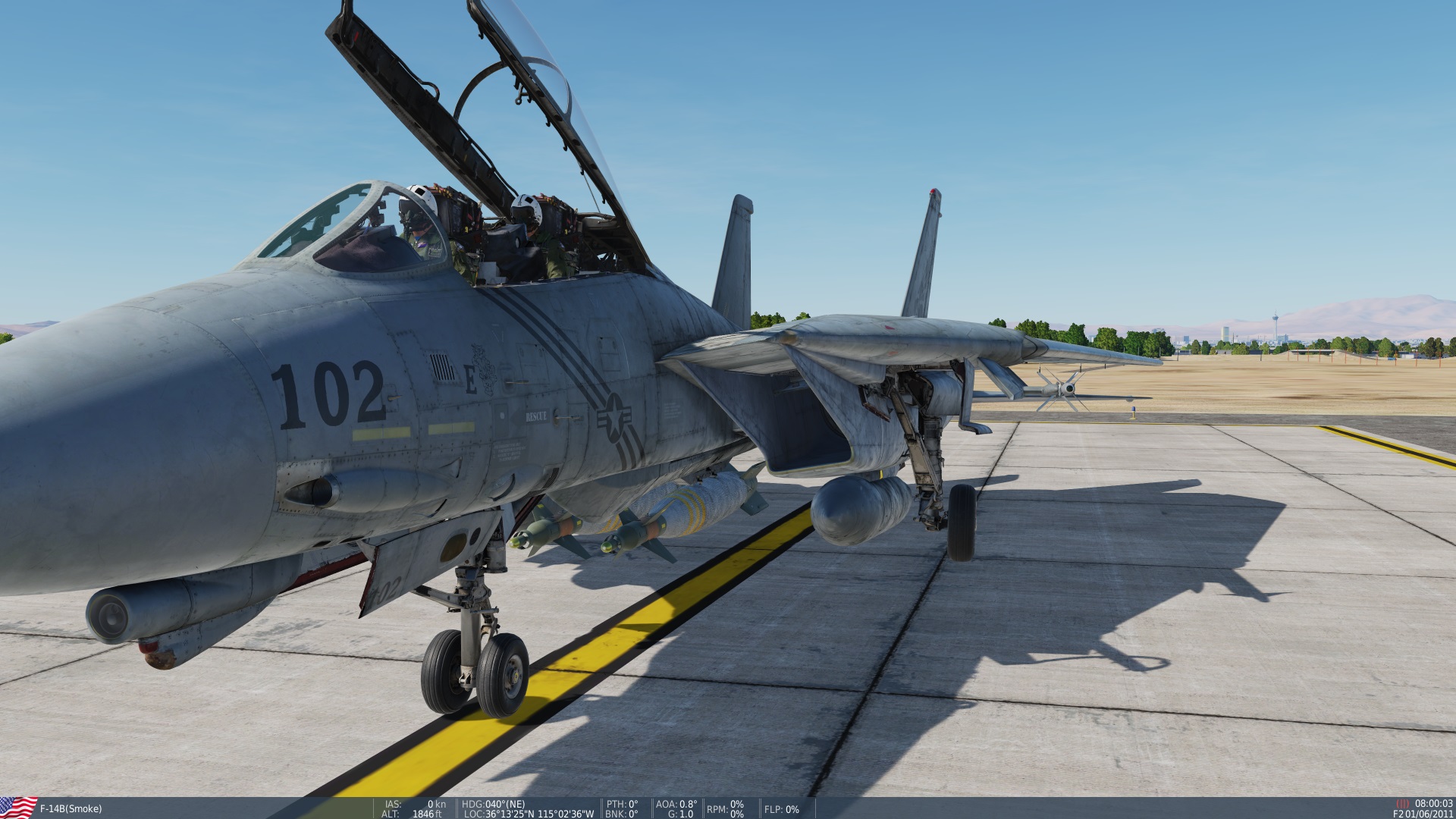
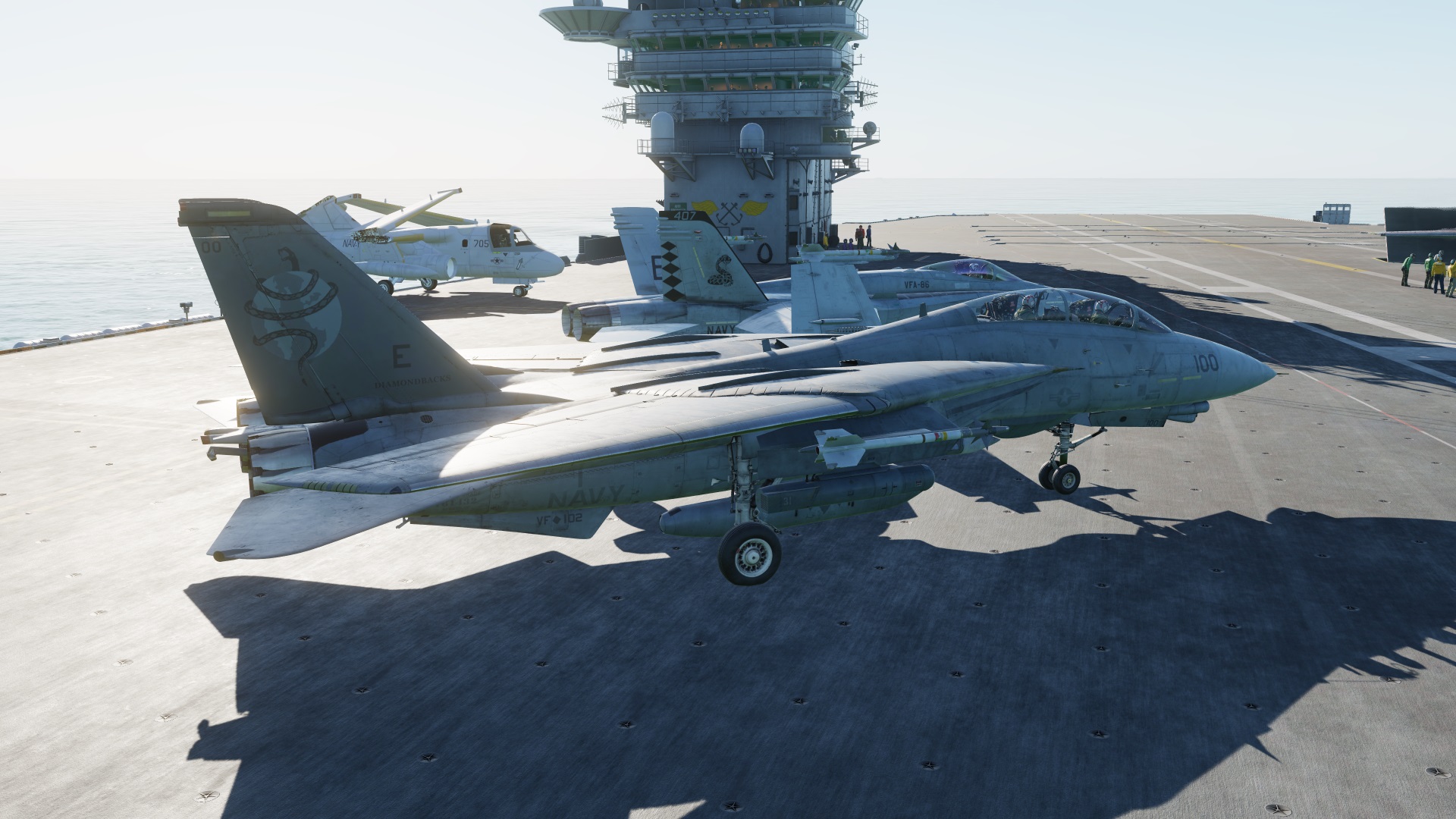
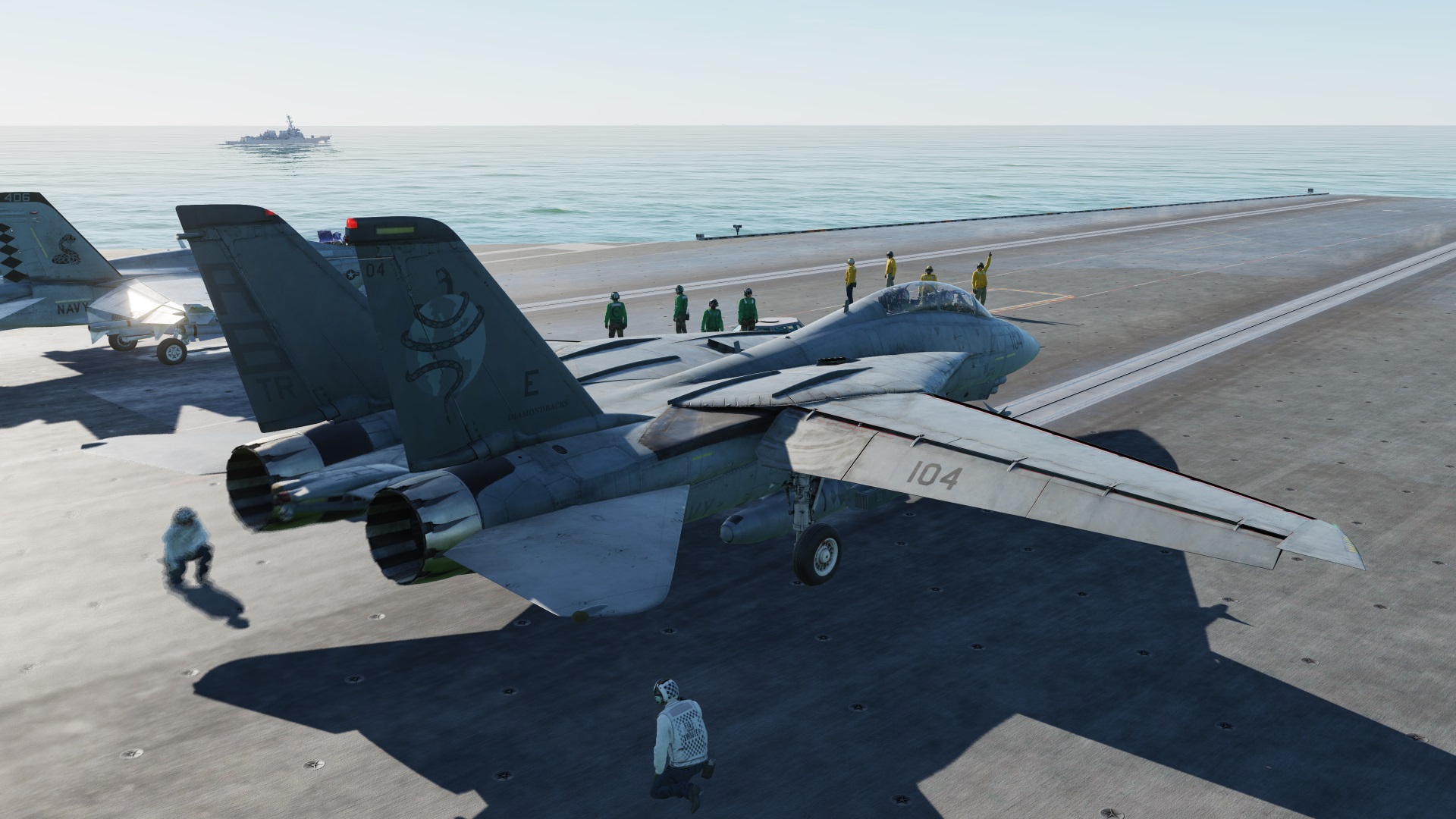
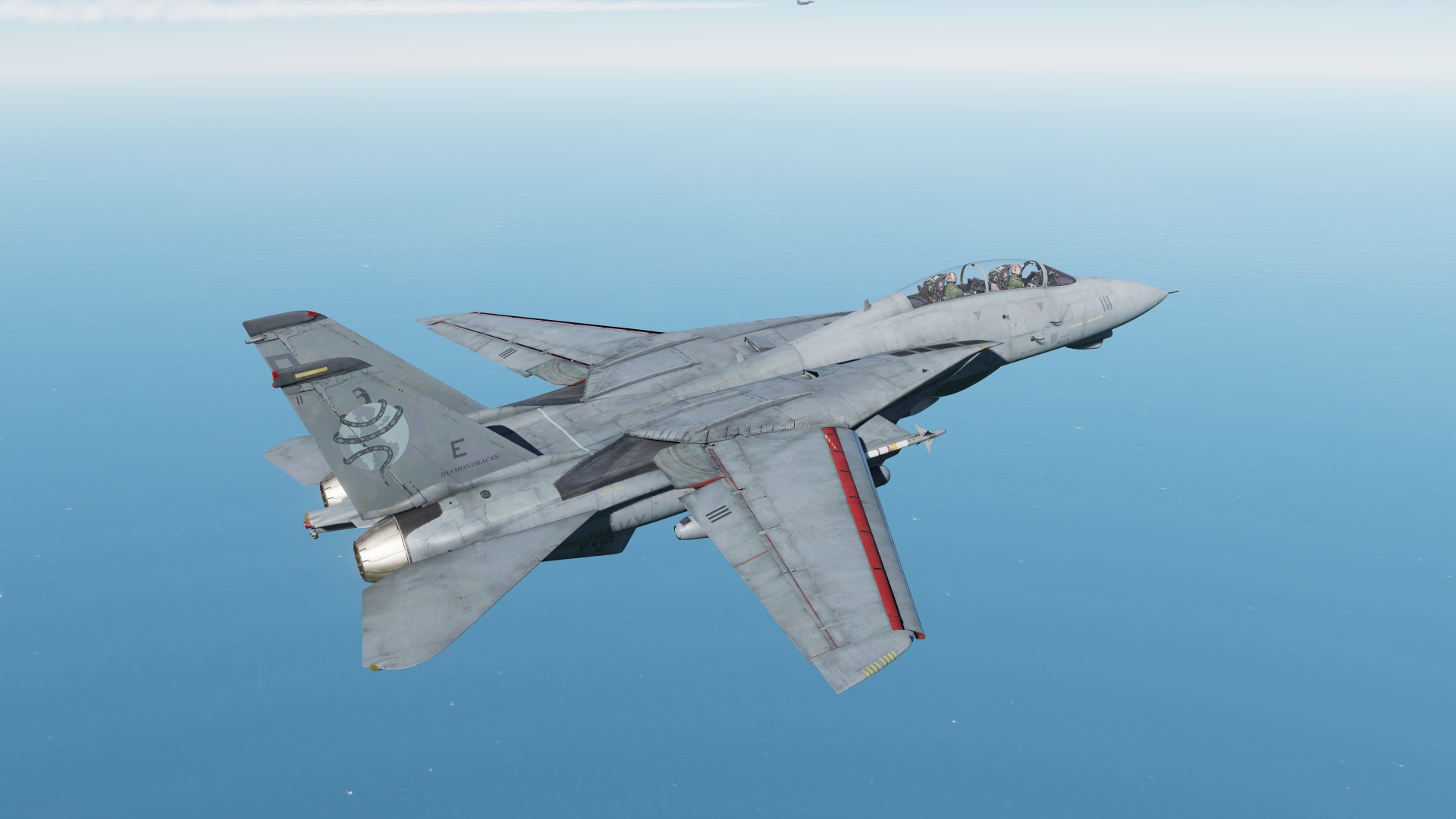
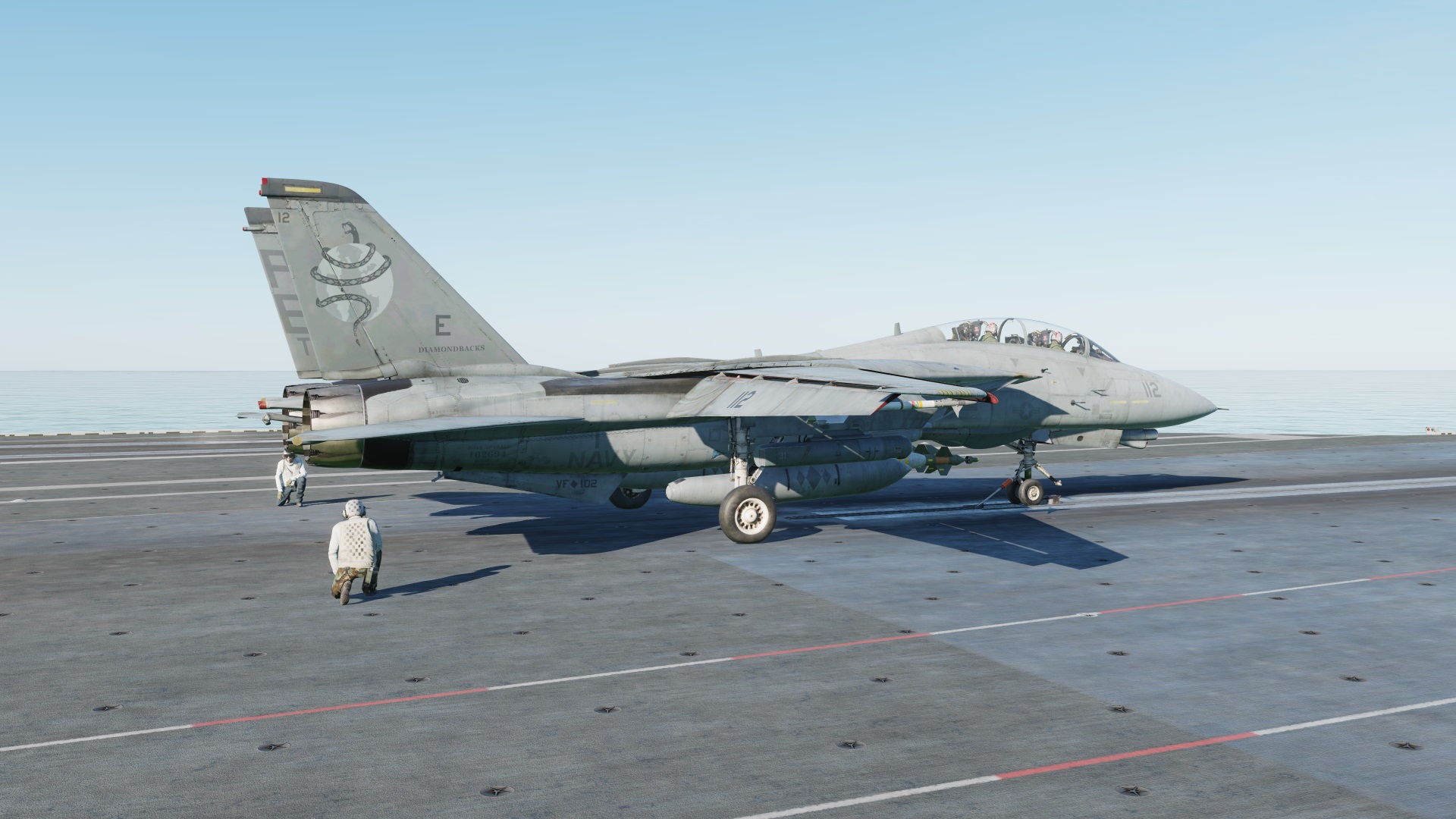
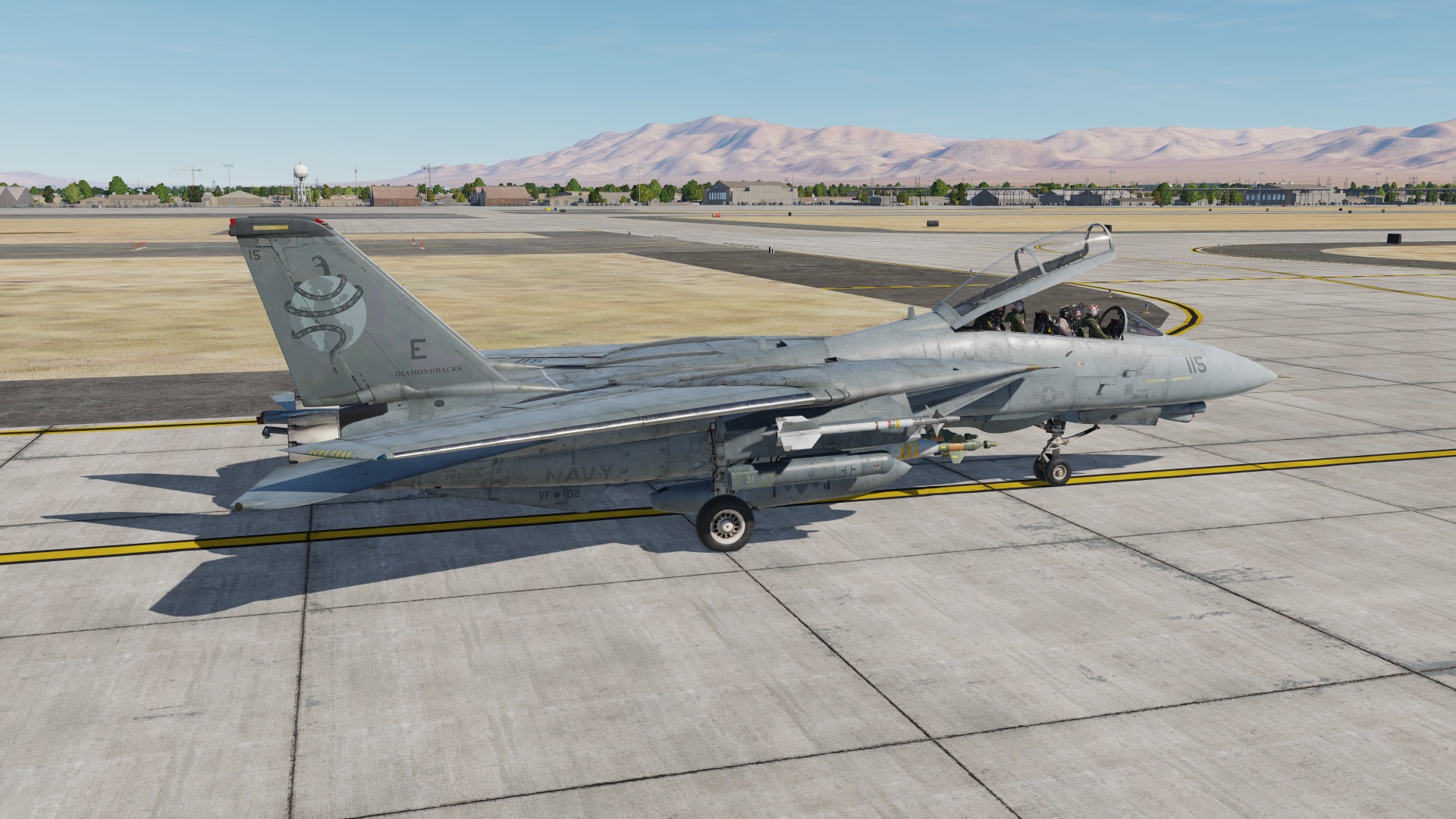
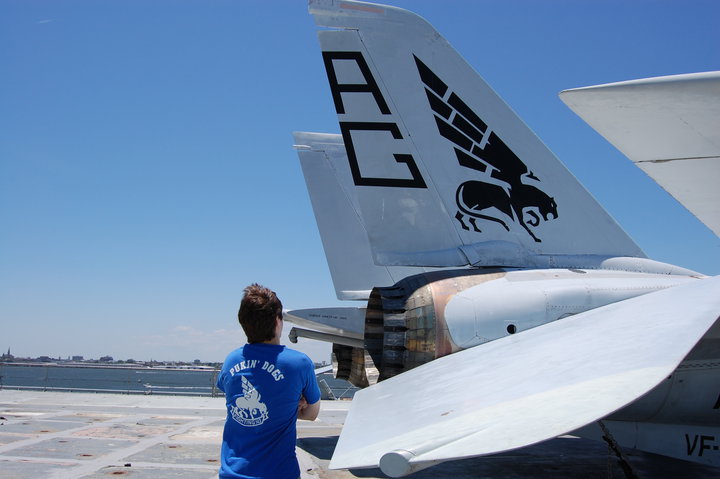
Since my favorite F-14B livery has been covered by someone else, I figured I would produce a second favorite. This is VF-143 circa 2004, covering the workup for and early deployment for OEF, which was VF-143's final cruise in the F-14. This skin pack will cover 9 of VF-143's 10 aircraft from 2004. The 10th, AG100, was covered by 59th_Jack's VF-143 2005 skin pack and unlike the remainder of the squadron, probably wasn't painted differently in the first half of the cruise than the last half, so I saw no purpose in covering this aircraft twice. Per usual due to limited information, no crew names will appear on canopy rails.
-
Considering the F-14B we have, it actually should be an HGU-68/P to be period accurate. Though considering the common tacair configuration used by F-14 crews, the -68 and -55 would be indistinguishable at view range. And it would be appropriate for the F-14A as well. Heck, the HGU-33 in the configuration we have was already on its way out by 1987, and Navy PRs were altering existing -33s to be cosmetically similar to the then new -55, removing the EEK-4 visor and replacing it with a bungee visor. From what I know, there are plans to add the newer helmet as an option, and I guess the option will be triggered by a line in the description.lua for each livery. I look forward to this change. Navy HGU-55s and -68s are my favorite helmet types.
-
Translation to make it a bit easier to understand: The GBU-38 and GBU-12 have different guidance packages, but the part of the weapon that goes boom is the same Mk. 82 500 pounder. It's up to the squadron gunners to add the appropriate parts to transform it into either a GBU-38 or GBU-12. That about sum it up, Rainmaker?
-
F14 Skinners thread (Paintkit in 1st post)
Swordsman422 replied to David A Sell's topic in DCS: F-14A & B
At least in the first book, VF-104 is not using the F-14B(U). The HUD symbology is described occasionally, and matches the original HUD we have in the HB module. This might be an oversight by the author, who stopped flying Tomcats a few years before the B(U) entered service. Either way, aside from the PTID and late-introduced JDAM capability, what we have in the module is as capable as what is described in the books. I'd really like to see a map of the western Persian gulf covering from Kazerun west to Arar and from KKMC north to Baghdad. This would include the majority of the Iraq NFZ, which is where the US Navy pretty much lived for the entirety of the 90s. Enough area for Iran-Iraq War and Desert Storm missions and campaigns as well. -
F14 Skinners thread (Paintkit in 1st post)
Swordsman422 replied to David A Sell's topic in DCS: F-14A & B
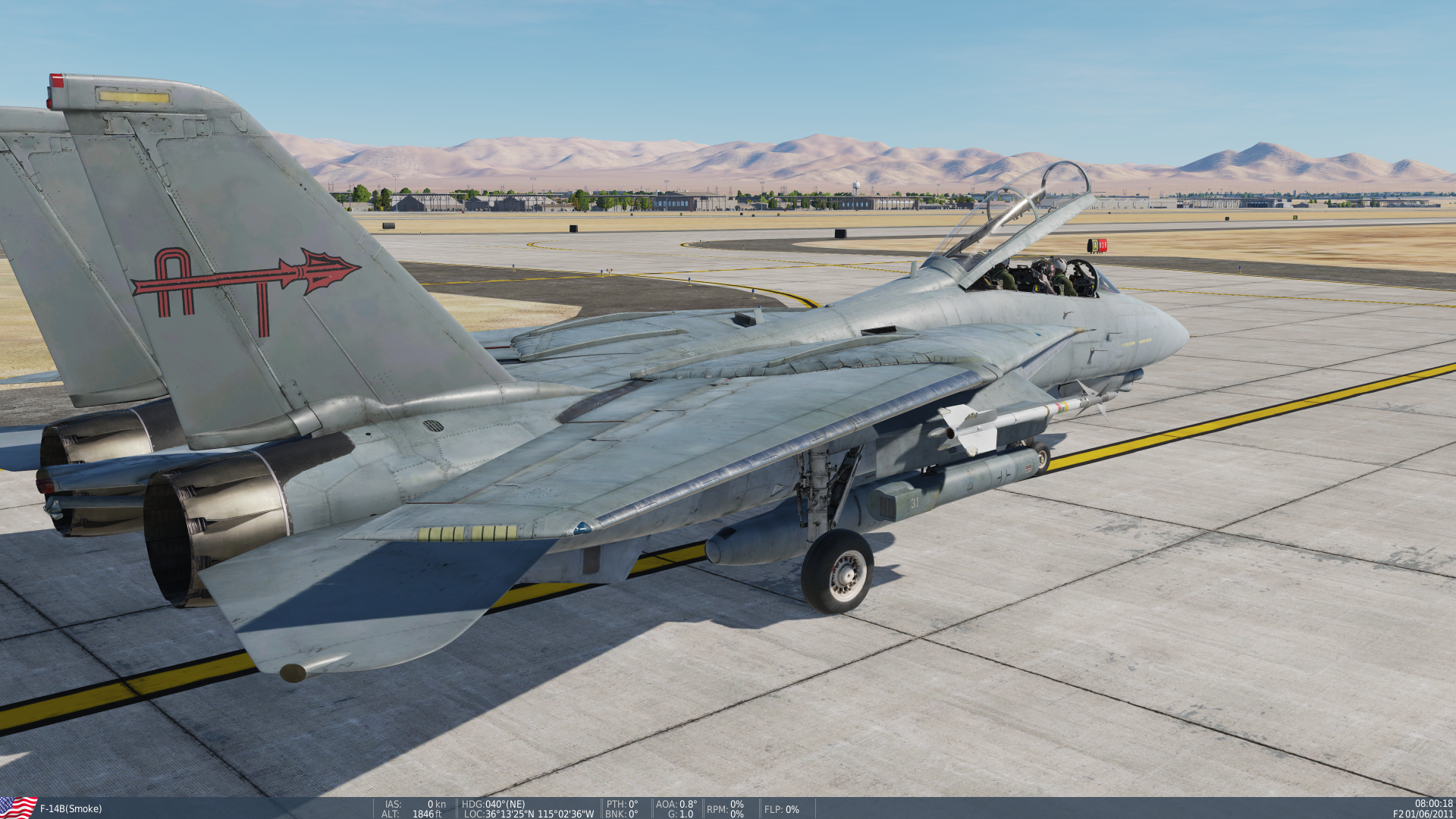
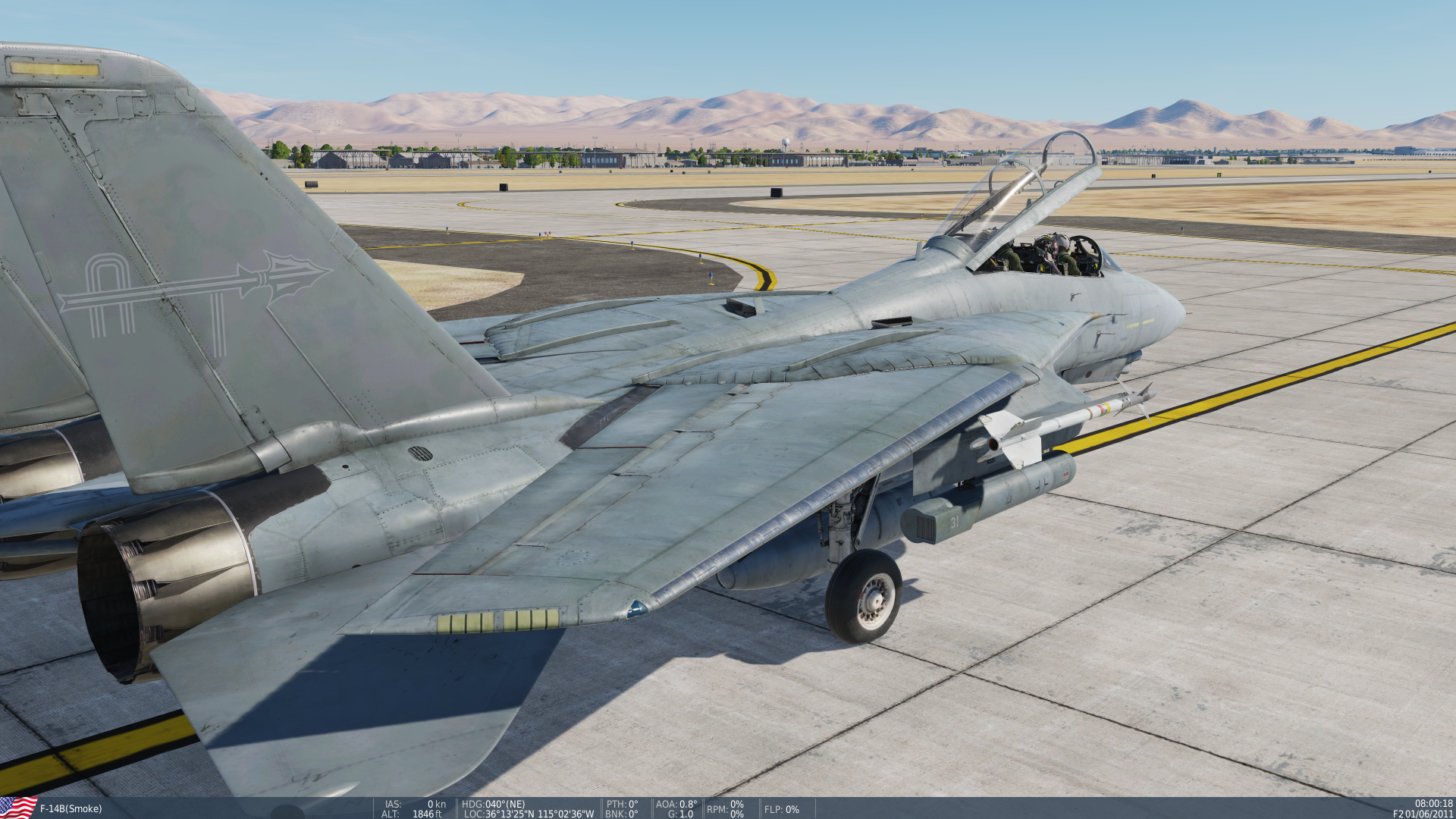
Do it anyway. I'd love to see other interpretations. What I have here is just a modification of FSU's Seminole arrow. I was also tempted to use the insignia of the real VA-104 Hell's Archers that was disbanded in 1959, which was a nuclear missile nocked into a bow. -
F14 Skinners thread (Paintkit in 1st post)
Swordsman422 replied to David A Sell's topic in DCS: F-14A & B
For fans of Ward Carroll's outstanding Tomcat novel Punk's War. Just starting out, now. Since the squadron tail art is never described, the squadron colors and patch art only hinted at, and the air wing completely fictional there will be a lot of artistic interpretation.
-
Why would ED comment on a request for a feature on a module that they didn't develop?
-
F14 Skinners thread (Paintkit in 1st post)
Swordsman422 replied to David A Sell's topic in DCS: F-14A & B
Add these to your description. Bold is the file name. {"HB_F14_EXT_PILOT_HELMET", 0 ,"HB_F14_EXT_PILOT_HELMET",false}; {"HB_F14_EXT_PILOT_SUIT", 0 ,"HB_F14_EXT_PILOT_SUIT",false}; {"HB_F14_EXT_RIO_HELMET", 0 ,"HB_F14_EXT_RIO_HELMET",false}; {"HB_F14_EXT_RIO_SUIT", 0 ,"HB_F14_EXT_RIO_SUIT",false}; -
That's what I figured, given the limits of ED's dynamic numbering system, which hearkens back to Flanker 2.0. It's a 20+ year old way of doing things that doesn't really work anymore. The whole system of dynamic numbers needs an upgrade, but I doubt we'll see a result soon because it doesn't really affect the way the sim functions. It's only an immersion feature. Frankly, the best way I have ever seen modex numbers handled is in the Strike Fighters series. The decal placement for each skin is programmed in a text file. Each decal has its own block of data that shows the program what the decal is called, what the name of the mesh is that it'll be added to, it's size, orientation, X and Y coordinates on the mesh, priority, and a numerical code that determines if the decal shows up all the time, only on specific squadrons, or only on specific aircraft. The drawback was that you could not select your modex number by typing it in. You had to select the modex number from a drop down menu in the mission planner, so if a skin represented a squadron of only 10 airplanes, you couldn't have 12 in the mission with different numbers. But some skinners were talented enough that all of the squadron's markings were rendered as decals and were different from one plane to the next. It's difficult to explain properly without screen shots, but it was fantastic and I doubt we'll ever see anything like it in DCS.
-
A clever attempt, but it doesn't detract from the point made in the back half of that sentence. You also assume that I'll be in the group coming with torches and pitchforks if it doesn't get resolved to my satisfaction, to which I can only offer a hearty shrug. But I'm pretty sure Heatblur's gonna gie it laldy instead of doing it by the half measure you're asking. Broken immersion from the numbers being wrong is no less the result as broken immersion from the numbers all being the same, which is exactly the point your correction helped make.
-
Not to the degree of the F-14 community. The F/A-18s basically had two modex locations: Above the slime lights or below them, and that's covered by the model. Not owning or doing any skinning for the MiG-21, I found this statement to be interesting, so I went digging in the files for the MiG-21. On pretty much every DCS aircraft, there is a set of optional placement areas on the model for the number decals and you basically feed the description.lua a texture file that it can pick numbers from. These numbers can be any font or size you like, so long as the number doesn't overflow the placement area, but their placement is preprogrammed on the model, basically. You can't really adjust the position. From what I see on the MiG-21 liveries, it behaves exactly the same way. You can give the .lua a font to work with. Each tac number has 4 programmed positions for each digit, and can accept a texture file with the digits on it, but you can't reposition the whole tac number someplace else on the nose unless there was a programmed position for it that the description file could reference. Below is a data block for just one 4-digit tac number in one location on the MiG-21: Tac Number Nose Set 1 {"MIG21BIS_SER_NOSE_0001", 0, "MiG21Bis_Fuse_F", false}; {"MIG21BIS_SER_NOSE_0001", 1, "MiG21Bis_Fuse_F_NMp", true}; {"MIG21BIS_SER_NOSE_0001", 13, "MiG21Bis_Fuse_F_RoughMet", true}; {"MIG21BIS_SER_NOSE_0001", 3, "empty_ser", true}; --{"MIG21BIS_SER_NOSE_0001", 3, "MiG21Bis_Ser_Nose", true}; {"MIG21BIS_SER_NOSE_0010", 0, "MiG21Bis_Fuse_F", false}; {"MIG21BIS_SER_NOSE_0010", 1, "MiG21Bis_Fuse_F_NMp", true}; {"MIG21BIS_SER_NOSE_0010", 13, "MiG21Bis_Fuse_F_RoughMet", true}; {"MIG21BIS_SER_NOSE_0010", 3, "empty_ser", true}; --{"MIG21BIS_SER_NOSE_0010", 3, "MiG21Bis_Ser_Nose", true}; {"MIG21BIS_SER_NOSE_0100", 0, "MiG21Bis_Fuse_F", false}; {"MIG21BIS_SER_NOSE_0100", 1, "MiG21Bis_Fuse_F_NMp", true}; {"MIG21BIS_SER_NOSE_0100", 13, "MiG21Bis_Fuse_F_RoughMet", true}; {"MIG21BIS_SER_NOSE_0100", 3, "empty_ser", true}; --{"MIG21BIS_SER_NOSE_0100", 3, "MiG21Bis_Ser_Nose", true}; {"MIG21BIS_SER_NOSE_1000", 0, "MiG21Bis_Fuse_F", false}; {"MIG21BIS_SER_NOSE_1000", 1, "MiG21Bis_Fuse_F_NMp", true}; {"MIG21BIS_SER_NOSE_1000", 13, "MiG21Bis_Fuse_F_RoughMet", true}; {"MIG21BIS_SER_NOSE_1000", 3, "empty_ser", true}; --{"MIG21BIS_SER_NOSE_1000", 3, "MiG21Bis_Ser_Nose", true}; Pretty big hunk of text for a single location for a 4-digit number. Subtracting one digit for the F-14 would decrease the size of this block, but then multiply that by 8 locations per aircraft where the modex appears. Still not bad for an aircraft where some of these numbers have one or two variations. On the Su-27, the bort number for the tail can be in high or low positions, for example. But those are preprogrammed. If I wanted to place a dynamic number in the middle, or on the rudder, it's not possible. The F/A-18 does a decent job of considering dynamic numbers. They have positions programmed for all the major using nations, and that's pretty good. But it's also a huge block of text. The F-14 modexes were even more widely varied in placement than that. You had the one on the nose, which might be above the slime light or straddling it. The numbers on the gear bay door might be the entire width of the door or just inches tall, absent, or removed to the smaller subdoors aft. The modex on the flaps might be 2 digits, 3 digits, tucked into the corner of the innermost flaps or outboard on the maneuvering flaps. The number on the rudders might be Up at the top, or on the inboard side, or down at the bottom, or off the rudder completely on the non-moving portion of the tail. And they'd have to account for a majority of these locations, because: There are some pretty famous liveries that people will want that fall WAY outside this approach. VF-1's 1975 cruise, for example. First deployment of the F-14. The livery had a big, red racing stripe on the nose that integrated the Modex number. The stripe filled more or less of the front fuselage depending on the modex of the aircraft. 100 requires a different gap in the stripe than 111. This placement was pretty much limited to this particular livery, but it still happened, and it's a popular livery, and people are going to want it and want it right. It also brings us to the issue of kearning and size limits. If you look at the F/A-18, give it the modex, say 111. You'll notice some pretty wide gaps in the digits to the point that, depending on your font, might make the modex number just look like three widely spaced lines. Taking this issue back to the F-14, what happens when the numbers are half the size of the chosen standard, as with VF-21 or VF-154 in the mid 1990's? What if they're larger, like VF-124 pretty much all the time? What if they're extremely italicized beyond the normal, like VF-2 or VF-301? You're going to get similar large gaps or numbers are going to get cut off as they exceed their allotted placement area. OR they're going to have to account for these variations and add more placement options, which will just eat up more data space. Others with just as much right to their own opinions rather wouldn't. Fixed that for you, because as The Dude would say "that's just, like, your opinion, man." It may seem AR to you, but this whole debate about how to solve the dynamic modex issue might seem AR and tedious to others, who aren't bothered in the slightest that the modex numbers on ever jet in the flight are the same. HB is working on it, and I trust that their solution will be satisfactory to the majority of us. It's just not a high-priority item yet, because even though occasionally realizing that both you and your wingman are flying 112 might crack the illusion a little, it doesn't break or subtract from the functionality of the aircraft or fail to deliver a promised product.
-
F14 Skinners thread (Paintkit in 1st post)
Swordsman422 replied to David A Sell's topic in DCS: F-14A & B
Sweet. Thanks for the heads up. -
F14 Skinners thread (Paintkit in 1st post)
Swordsman422 replied to David A Sell's topic in DCS: F-14A & B
Interesting. Dave swears his photo of 162917 was taken in early 99, but it's been more than 20 years. Stuff happens to the memory. It is indeed very difficult to nail down BuNo/Modex during any period unless you have access to squadron maintenance records that were exactly dated. I am far more secure in my numbers for the OEF livery than I am the earlier one. Any further F-14B skins I do will all be OEF/OIF deployments where I know my lists are accurate. And I still don't have crew names for all the jets, which is one of the reasons why I exclude them. The other being that these liveries are being used in fictional missions and campaigns where the squadron make-up doesn't have to reflect reality. Modex gaps happened all the time with attrition and aircraft transfers. So far as I know, after 2000 the only squadrons that I can find didn't have gaps in the line-up were VF-11, VF-14, and VF-31, and those only account for up to 2003. 2004-2006 I can't promise anything. What's going to be really fun is when the F-14A comes out, trying to find and match all the aircraft nicknames for VF-41's OAF cruise... Speaking of my VF-102 OEF livery, it's still stuck in pending. Anyone knows how long it usually takes for approval? The 99 skin was available in only a couple hours. -
F14 Skinners thread (Paintkit in 1st post)
Swordsman422 replied to David A Sell's topic in DCS: F-14A & B
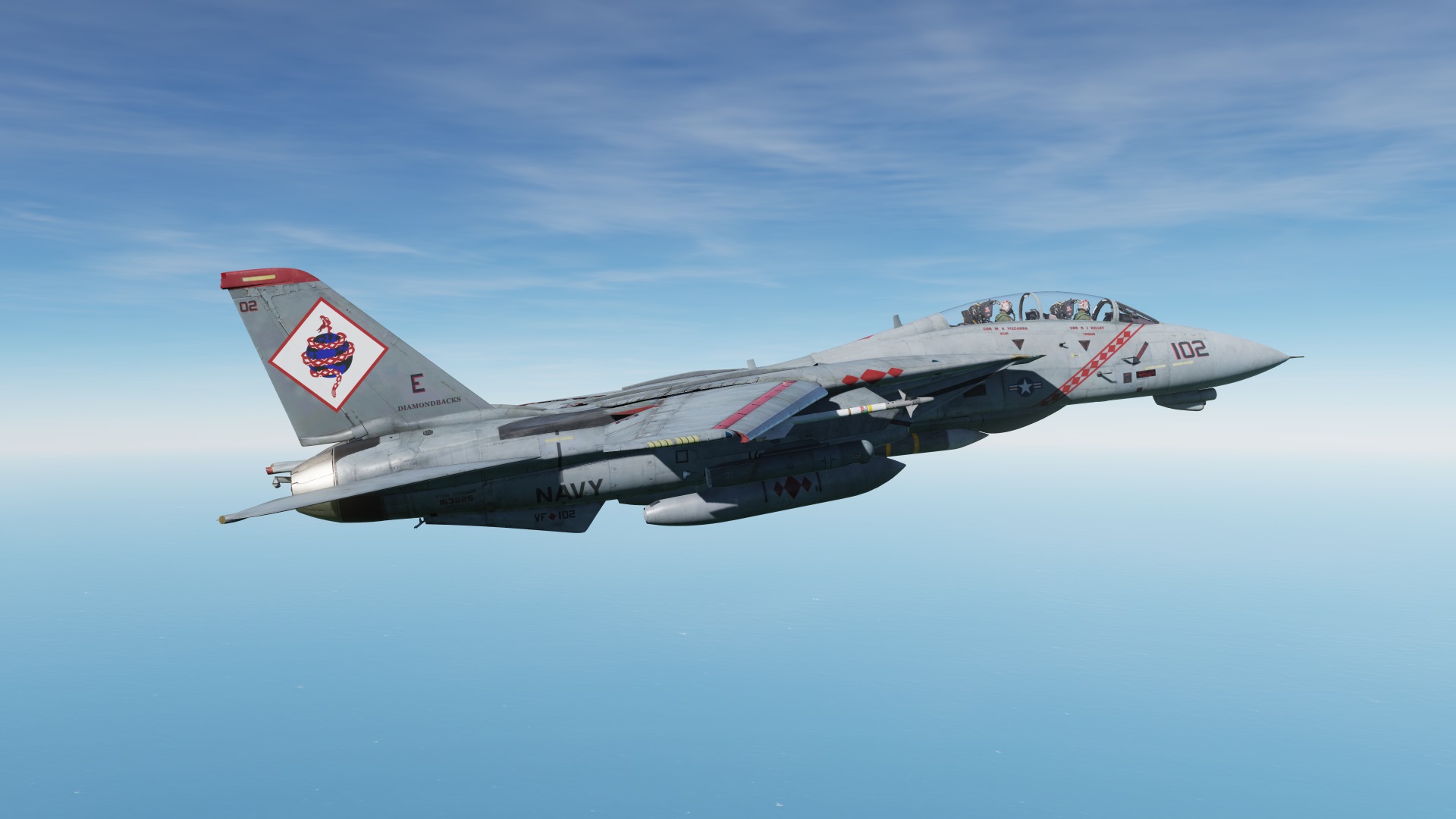
I'm with an F-14 Community FB group. Noted aviation photographer Dave Brown posts there regularly and always identifies the BuNos he photographs. In 1999, VF-102 still had 14 airplanes assigned to it. AB103 was 163227, AB107 was 162917, and AB113 was 163219. During the OEF deployment, VF-102 deployed with 10 aircraft and used the following modex numbers: 100, 102, 104, 105, 106, 110, 111, 112, 114, and 115. Those aircraft were 161432, 163225, 161440, 162692, 162910, 163407, 163217, 162694, 161422, and 161608 respectively. 163407 was left behind in theater in late February of 2002 and crossdecked to VF-143 to replace 162923, which was lost in a fatal crash near Crete as the USS John F. Kennedy was transiting to the NAG. This is one of two crashes that occurred within the span of about a month and grounded the F-14 fleet for weeks. There are some interesting photos out there of 163407 with incomplete VF-143 markings. -
F14 Skinners thread (Paintkit in 1st post)
Swordsman422 replied to David A Sell's topic in DCS: F-14A & B
I've found that list with some that I'm missing. I may add a 4th part to the pack in an update to include these. -
F14 Skinners thread (Paintkit in 1st post)
Swordsman422 replied to David A Sell's topic in DCS: F-14A & B
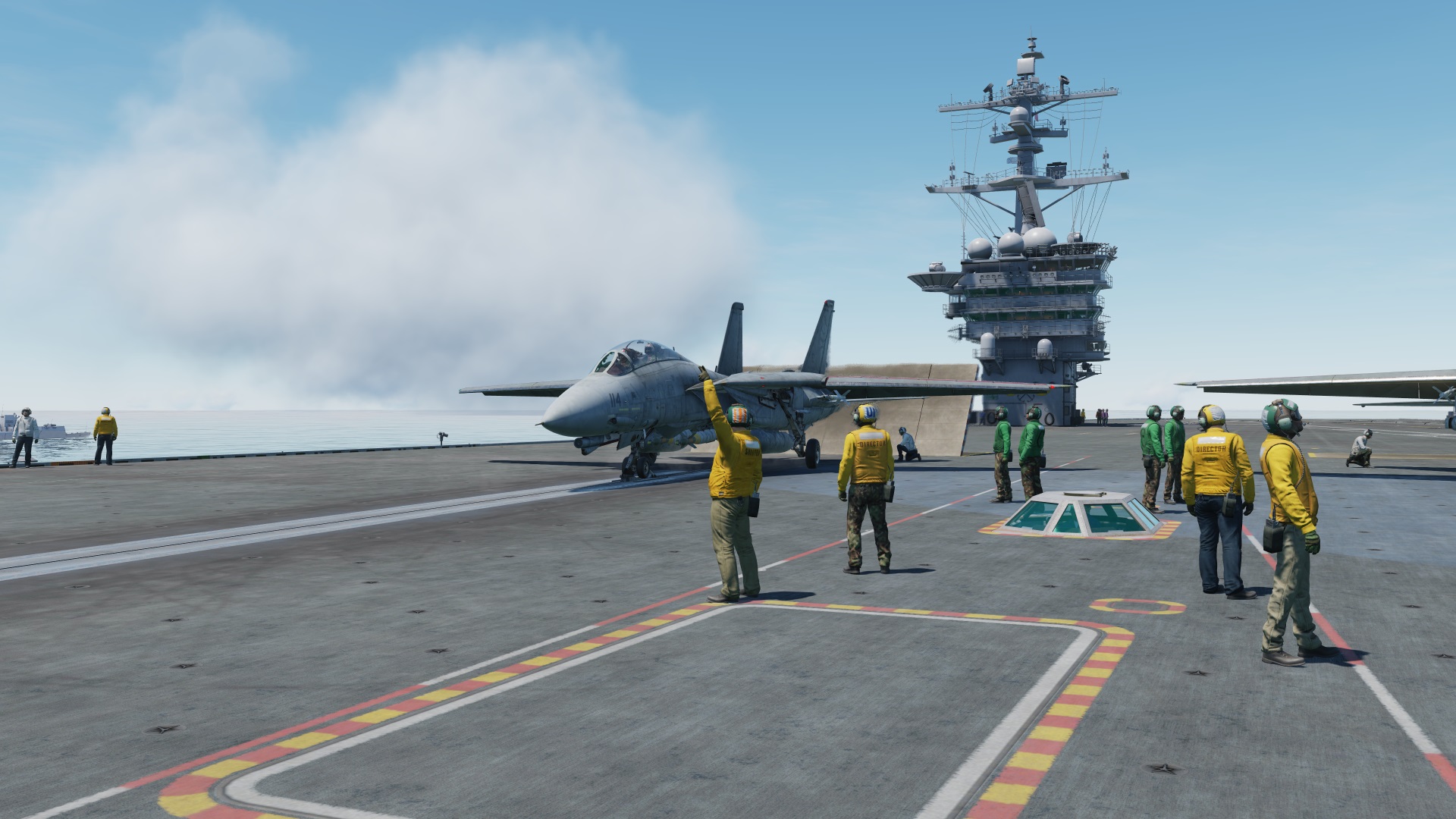
Uploaded the VF-102 OEF livery packs yesterday. Still waiting for approval but they should be available for download soon. All 9 of VF-102's line aircraft that took part in Operation Enduring Freedom and an optional improved livery for AB102 from OEF (does not overwrite the HB default).
-
No F-14 production model ever had FBW. The DFCS added some stability control, but it wasn't a fly-by-wire system. Until the end, the F-14's surfaces were moved by good ole fashioned fluid pressure and pistons. If the fly-by-wire system doesn't have limiters to prevent the pilot from catastrophically overstressing the airframe, it's still not going to do you a lick of good. Don't yank the stick so hard and you should be fine.
-
That's very kind of you to say. Thank you. Just so you know, the F-14A doesn't require a second purchase. It's a planned part of the module, so you'll automatically have it when it's released.
-
The issue is this: Look at all of these jets, all of these modex styles, all of the different placements. It's not just between jets in a squadron. It's between different squadron liveries and periods. VF-124's 1986 modex placement and size is different than VF-1's 1975 modex placement and size is different than VF-154's 2003 modex placement and size is different from VF-32's 2003 modex placement and size. The F-14 community had far less uniformity in modex placement than the F/A-18 community or the Su-27, where the borts were pretty much uniform and your method of single-digit or double-digit replacement would work. On DCS aircraft, your dynamic modex location is coded on the model or something like that. They'd have to create decal placement for Every. Possible. Permutation. If they don't someone is sure enough going to be mad that they can't have the modex numbers on their favorite livery exactly right. They'll say "when I look out my canopy to my left and right wingman and the modex numbers aren't properly aligned with the stripe on the nose, or they're too large, too small, to far forward or aft, too much space between the numbers... thats trash," and they'll be just as entitled to their own opinion as you are to yours. To them, it's going to be an issue. And you can say "well, they can just live with it not perfect. I want my dynamic modex numbers." Why do they have to sacrifice? Maybe you can just not have what you want instead. Heatblur has repeatedly stated (because they've been repeatedly asked) since the beginning (here in fact https://forums.eagle.ru/showpost.php?p=3825758&postcount=1) that they're trying to fix this in a performance-friendly way, since people will also squawk if the framerate drops because Heatblur had to be prepared for Every. Possible. Permutation. But I can't imagine it's particularly high on their priorities list. It certainly has to be below the Jester using LANTIRN, because that's URGENT, or the F-14A, because that's URGENT, or the Forrestal-class, because that's URGENT, or the pilot body in the cockpit, because that's URGENT, or the cockpit engine instruments, because that's URGENT... if you believe all the posters that have been saying "when I can't launch from the USS Independence in my F-14A to go drop a bomb on a target found and lased by Jester while looking down at the correct instrument panel that's partially blocked by my pilot's knee yet... that's trash." It's a sizable challenge to overcome for fairly minor return compared to all of the other projects they have to complete for this module, especially when this issue has something of a workaround now. But I trust that Heatblur will eventually take care of it in a way that satisfies the maximum number of people and looks right in the end.
-
F14 Skinners thread (Paintkit in 1st post)
Swordsman422 replied to David A Sell's topic in DCS: F-14A & B
I am currently doing the period shown on that list. I have the Modex/Buno list in Tony Holmes's F-14 Tomcat Units of Operation Enduring Freedom, so essentially yes. The Modex/BuNo match up for the 1999 livery is incomplete, but I was able to match 8 thanks to the F-14 Tomcat Community FB group. I have the ability to update the numbers and add more later. It's released, but I will continue to work on it. GoNavy is a good resource, though. Good idea to post it for skinners to use. Thanks.