
LanceCriminal86
-
Posts
1063 -
Joined
-
Last visited
Content Type
Profiles
Forums
Events
Everything posted by LanceCriminal86
-
Yes the E was used in Vietnam, but not *this* E as presented in the DCS module. To get some ideas of the upgrades Joe Baugher's page is a good start as it walks through some of the upgrades. Mainly as said the slat retrofit kits didn't start being applied until after Linebacker II in late '72. The ALR-46 in the module was retrofitted somewhere from the mid to late 70s, same with the ALE-40 flare dispensers, and the upgraded DSCG screens and interface was again somewhere 72-74 and on. It also has a few under the hood changes that were done into the 80s, but the above would be the big differences from a Vietnam E.
-
"Official" F-4E Livery Discussion
LanceCriminal86 replied to LanceCriminal86's topic in DCS: F-4E Phantom
Ben decided not to include the ICE jets for now, and the Holloman jets were later TISEO/DMAS serials which will of course be done when that addition comes along. 81st TFS, again DMAS jets. I think we already have a lot of special/demo jets but the rest of the 32nd and 3rd TFS are certainly ones we'd like to do. -
"Official" F-4E Livery Discussion
LanceCriminal86 replied to LanceCriminal86's topic in DCS: F-4E Phantom
SJ were 99% DMAS jets, we'll of course be bringing plenty of them in when it's that time -
F14 Skinners thread (Paintkit in 1st post)
LanceCriminal86 replied to David A Sell's topic in DCS: F-14A & B
I'll talk to Ben_Der and see if I can make a version of his .bat from the F-4E into an F-14 one and share the contents here. I might be needing it myself soon. -
The F-4Es presented in the module are pretty far off from the Vietnam jets. You could maybe get away with a 1974+ reignition of hostilities type thing but these jets have late 70s RWR, slats that had only shown up at Linebacker II, and the DSCG. Most Vietnam Es were hard wing, early gun muzzle, DVST screen, and either no RWR or some APR-36/37.
-
F14 Skinners thread (Paintkit in 1st post)
LanceCriminal86 replied to David A Sell's topic in DCS: F-14A & B
You can convert from PNG to DDS BC7 using AMD Compressonator, which can be easy once you write up a script/.bat for it and just run it in the folder with the PNGs. It's what we've been doing with the F-4 as it lets you do the whole stack of textures at once. If you read the documentation you can figure out how to create the .bat so it looks for each filename and then knows what kind of DDS compression to do, ie BC7 for albedo and Roughmet, and BC5 for Normals. -
I don't think you'll be disappointed, it will give you tons of breathing room to try/fly modules as you please, have piles of skins, without having to rotate modules out.
-
It's gotten to where you almost need a 2TB, even if you don't have every module ever installed. Especially if you want to cram Kola in there if it gets some more improvements. If you stay slim on modules a 1TB will probably continue to work but liveries, mods, maps, etc. can really start to blow up drive space. If you can somehow swing a 2TB, it will give you a lot of future proofing but I totally get if that's not in the budget. I'm looking at doing this myself, getting a 2TB to replace/supplant my current 1TB DCS drive.
-
The Navy F-4s and USAF C/D which used the Navy pylons could do that, yes. The F-4E has a different pylon system which could not carry those loads and clear with a pair of Sidewinders.
-
It was noted somewhat late and *might* get corrected further on as that will mean tweaking either the tank model or working the animations to take the pylon with it.
-
"Official" F-4E Livery Discussion
LanceCriminal86 replied to LanceCriminal86's topic in DCS: F-4E Phantom
Spang jets were all TISEO/DMAS, so they'll come once that variant is done. -
F14 Skinners thread (Paintkit in 1st post)
LanceCriminal86 replied to David A Sell's topic in DCS: F-14A & B
The IRIAF/IIAF skins will come officially anyways with the module in the future, he has not left. He's provided our IIAF/IRIAF skins in the Phantom and once art is ready for the Tomcat he will no doubt be moving his work over, or creating fresh ones for it. -
"Official" F-4E Livery Discussion
LanceCriminal86 replied to LanceCriminal86's topic in DCS: F-4E Phantom
There are many more and a bunch of those are old/have been updated since that was shot. -
201, 202, and other missing squadrons will eventually be added with the module.
-
There were only the 412 and 414. Early on 412 were modified and further production altered to remediate the kaboom issues from the first cruise and period thereafter.
-
The IIAF/IRIAF jet will be the 80s -135 with some systems turned off, it will not be a 1:1 of the 90/95 as delivered to the IIAF.
-
Which year do F-4E got AN/APR-46?
LanceCriminal86 replied to Mig Fulcrum's topic in DCS: F-4E Phantom
It's not a "1974" jet, that year was used to represent the core time by which DSCG and slat modifications were performed on most early serial jets. The other items like ALR-46 and ALE-40 were being added to new aircraft around 71/72 FY serials, and slowly were making their way to older serial jets through the mid-70s and onwards. With Phantoms spread across the globe, it would take time for jets to rotate back through stateside or a depot to have modifications made, so it's not unheard of that jets wouldn't solidly have everything even through the later 70s. The DSCG jets will also include some of the later modifications to include AIM-7M and AIM-9M compatibility, so they naturally are not a "1974" jet as they can employ later 80s update weapons. It will also allow for other weapons that were out of USAF inventory by the mid-70s and onwards, namely Bullpups, as the capability was apparently never removed. The DMAS itself isn't a "79/80" jet either, it's effectively mid-80s as that's about when the modifications were completed adding DMAS/ARN-101 to TISEO equipped jets, plus the same changes made to the DSCG jets allowing AIM-7M/9M use. -
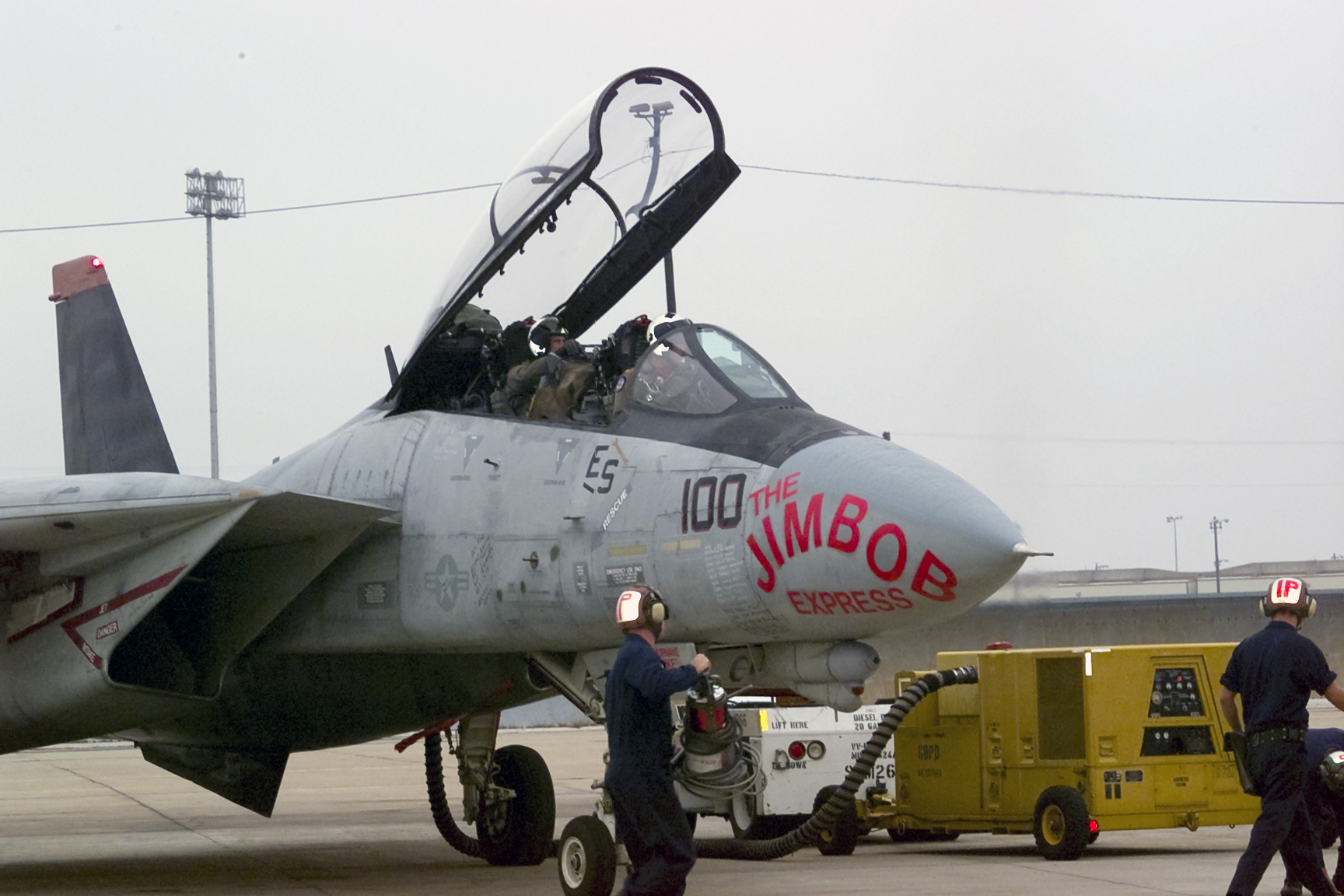
F-14A spawns with engine nozzle open
LanceCriminal86 replied to Booka42's topic in Bugs and Problems
This is accurate to the aircraft. http://acc.kitreview.com/images/aires4256reviewrk_reference.jpg -
It's been stated more than once that they are not going down the road of attempting to add all the random weapons and systems foreign users grafted onto their Phantoms, just the same as the random weapons that have been hung on Tomcats over the decades.
-
"Official" F-4E Livery Discussion
LanceCriminal86 replied to LanceCriminal86's topic in DCS: F-4E Phantom
We're way ahead of you -
That's been my research as well, unlike the Navy the AF wasn't working with NV in the 80s, at least not in any way that made it to F-4 squadrons. NVGs would only apply to the Terminator or AUP Phantoms as I don't even think Japan or the ROKAF have been seen with NVGs.
-
Yes, that looks like a VTAS II based on the visor housing and protrusions. There have been accounts of limited use of it into the early 80s but by then it was an individual choice for the most part, and depending on if the system was up. Most chose not to use it and wore a standard APH-6 or HGU-33 helmet. The video is at least from their '81-'82 cruise, as they had F-4Ns during their previous cruise through '80. It appears the VTAS system was "abandoned" around '79 so squadrons or pilots holding onto it for a few years longer makes sense until it was removed from inventory wholesale. There were apparently some commanders that insisted on the system being up, and pilots that preferred to use it when it was operable so seeing it here and there into the early 80s isn't out of place.
-
Carrier version for reduced price?
LanceCriminal86 replied to Cavemanhead's topic in DCS: F-4E Phantom
And of course the Reserves operating theirs from Miramar and NAS Dallas with carrier quals/drill. -
Feedback Thread Tomcat Hotfix Dec 28th 2023 (now live!)
LanceCriminal86 replied to IronMike's topic in DCS: F-14A & B
Really the boarding ladder should only be down if the crew is boarding, or the ground crew are working on the jet or prepping it. Typical static jet on the deck or tarmac I wouldn't expect to see the ladder deployed. If you're setting a static jet however to have the canopy up then ladder down makes sense. Logically (and may be done eventually) the boarding ladder should be handled under the ground crew comms with the chocks, air supply, and ground power. During startup the ladder should be stowed going off a number of clips such as this from VF-211 at Oceana: -
Not a pedantic question at all! It's pretty common across any interest where a military adopts a new thing, and then rolls it out into use. You kind of have to mix official documents/statements, accounts from end-users, and photos together to build a good idea. It's hard to find specific dates for squadrons or numbers, but if we're comparing to say the TCS rollout you'd expect the first batches of missiles after weapon tests to get to squadrons that are about to go on deployment, possibly in time for them to do a MISSILEX before their cruise with the new missile. Apparently VF-2 may have taken the C on it's first cruise, trying to find the dates but '87 potentially. Operational testing and eval was going on in '84-'86 timeframe so '87 rollout to first fleet squadrons makes sense, putting decent numbers of them in place by Desert Shield/Storm. And there are photos of Cs being painted white, so before the Navy switched missiles to the tactical paint schemes. You can at least see on Ranger's 1987 cruise there is a photo of a 54C in white: On the second part, basically the stocks of As were used for live fires and expended until they were either gone or the motors were unsafe to use. During the transition photos have been spotted where there were 54Cs with white motor/fin sections and grey seekers for example.